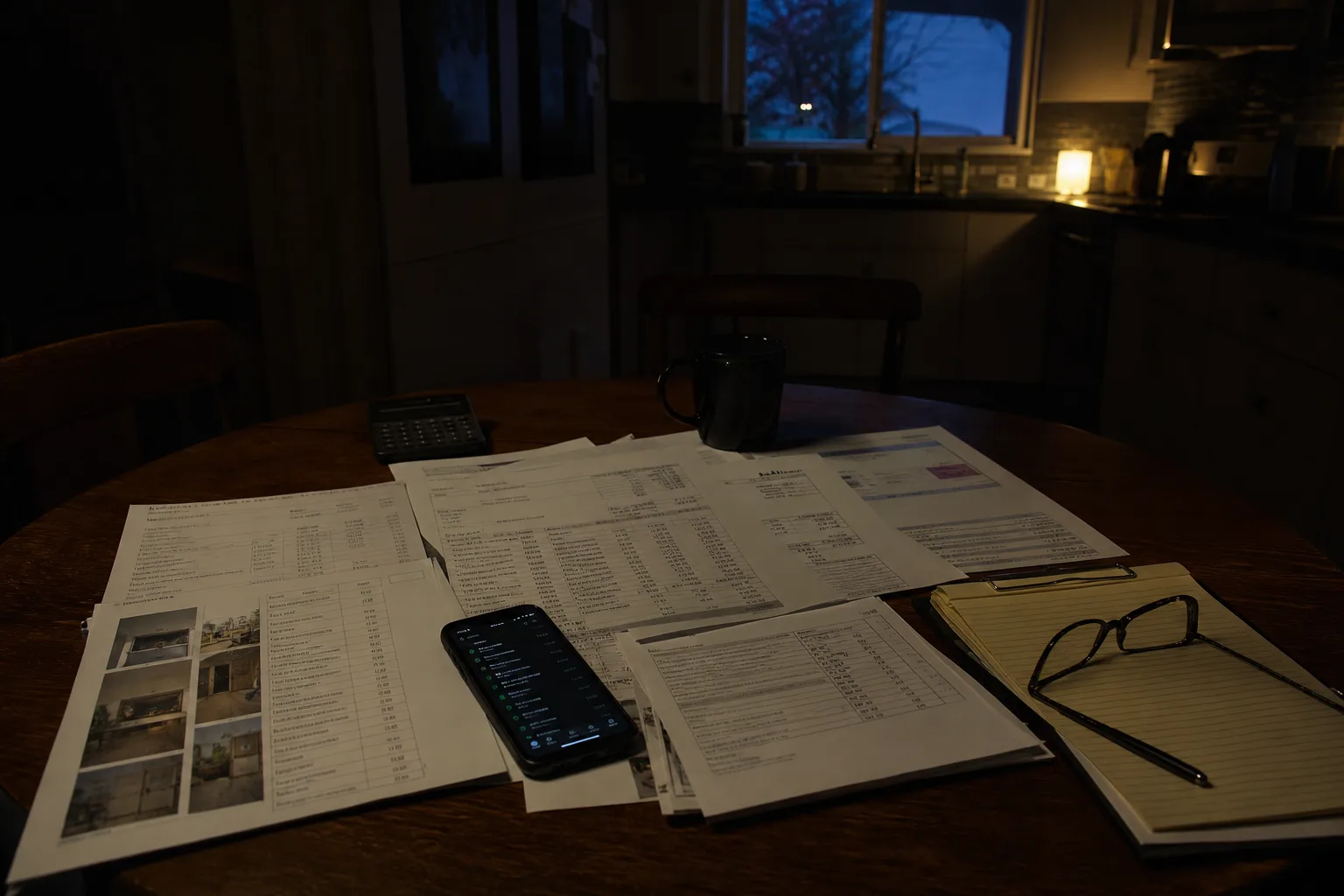
The moment you call the claims line, you are creating a record, and that happens well before anyone has decided whether a dollar will be paid. People who handle claims for a living take this for granted. Homeowners almost never do, because the phone tree gives no hint that a first notice of loss is a durable entry rather than a conversation. The consequences show up much later, usually eleven months on, in a renewal packet that reads differently than the last one, with a water deductible where there was none and a discount quietly gone.
Everything downstream of that call runs through people who are working for somebody, and it is rarely you.
The inquiry, the notice, and the entry that outlives both
Carriers distinguish between a general question about coverage and a first notice of loss, and the distinction matters because only one of them reliably reaches the industry loss database that other insurers pull when you shop. In practice the line blurs, since a call that names an address, a date, and a cause of damage often gets logged as a loss even when you close by saying you will handle it yourself. Ask directly, at the start, whether you are reporting a claim or asking a coverage question, and note the date and the name of the person answering.
That database is a consumer report in the legal sense, which means the Fair Credit Reporting Act applies to it, and the Federal Trade Commission oversees how consumer reporting agencies handle disputes and access. You are entitled to see what is in your own file, and to dispute an entry that misstates what happened. Entries generally persist for several years, long enough to cover two or three renewal cycles and one move. A withdrawn claim usually still shows, marked as closed without payment, which underwriters read differently than a paid loss but do not ignore.
Who the person standing in your basement actually works for
The adjuster who calls within a day or two may be a staff employee of the carrier, or an independent adjuster working for a firm the carrier retained for volume, or a catastrophe adjuster deployed for a storm and gone in three weeks. All three write the estimate that decides your payment, and none of them are your representative. A public adjuster is the one who works for you, paid a percentage of the settlement, and worth considering on a large loss and rarely worth it on a small one. Knowing which of the three is on your porch changes how you document the loss and how quickly you follow up.
The mitigation crew is a separate chain again. If the carrier dispatched them, they came from a managed repair network, they bill the carrier at agreed rates, and their scope is what the program authorizes rather than what you would choose. If you found them yourself, they may hand you an assignment of benefits, which transfers your right to collect on the claim to them. Read that page before signing. Several states have narrowed what an assignment can do, precisely because it moves the dispute away from you and into a fight between two companies over your house.
What the renewal packet actually says afterward
The visible change is the premium, and it is usually the least of it. Underwriting typically responds to a paid water loss by attaching a separate water damage deductible, sometimes a percentage of the dwelling limit rather than a flat figure, which quietly moves the next five thousand dollar loss into territory you will pay for entirely. Roof coverage may shift from replacement cost to actual cash value on the same renewal. The claims-free discount disappears, and because most households bundle, the auto policy on the same account can lose its multiline credit at the same time.
Then there are the consequences nobody traces back. An inspection order triggered by the claim finds a deck rail or a service panel the carrier now wants addressed within thirty days. A second claim inside three years, even a small one, moves you from a standard carrier to the surplus lines market, where forms are not standardized and coverage you assumed was automatic has to be bought back. If you sell, the buyer's insurer pulls the loss history on the address, and a prior water claim can stall a binder in the last week before closing.
Timing is the part you control
Renewal offers generally go out a month to six weeks before expiration, which means the underwriting decision was made earlier still, and the claim you reported in the spring reaches the file well before you see the consequence. If you are within a few months of renewal and the loss is close to your deductible, do the arithmetic before calling: the payment net of deductible against three years of higher premium, lost discounts, and a changed water deductible. Handling a small loss yourself is not gaming anything. It is buying the same repair without the record.
When the loss is genuinely large, report it promptly and build the file properly, because delay is the reason claims get reduced. Photograph before the mitigation crew arrives, keep every invoice, and ask the adjuster in writing for the estimate they wrote rather than a summary. When repairs are complete, get a letter from the contractor stating what was replaced and when, dated and on letterhead. That letter is what lets an underwriter treat the loss as resolved rather than ongoing, and it is what a new carrier will ask for if you shop the policy the following year.
People who have been through this several times keep two things: the date of every call, and a folder with the proof of repair. The first tells you what your record says. The second gives the next underwriter a reason to write the policy anyway.