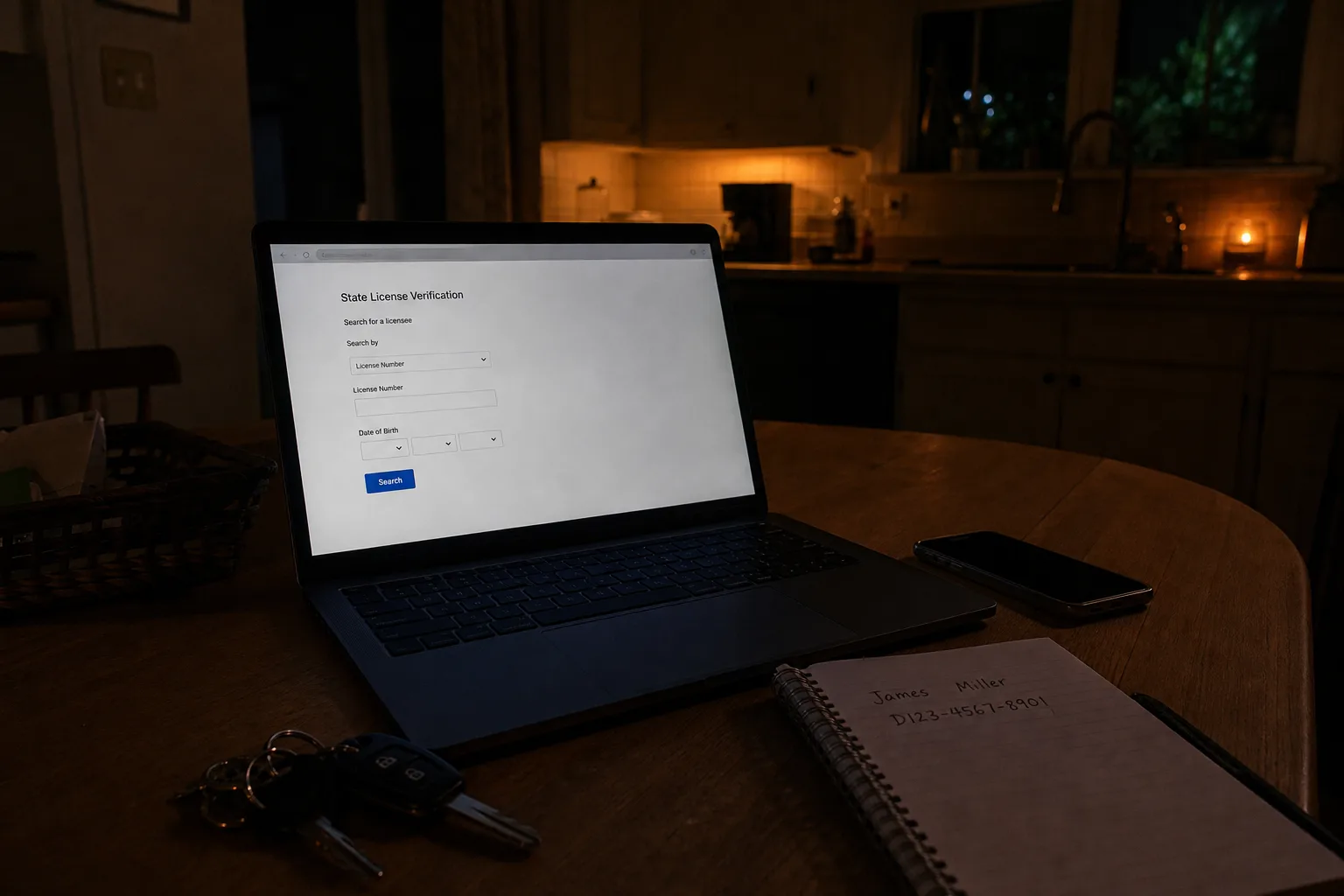
The call usually comes in the same shape. A parent two states away needs a procedure, a clinic has been recommended by somebody at the senior center, and the adult child doing the arranging has one evening and a laptop to decide whether these are serious people. The instinct is to look for credentials, and credentials are easy to find, because clinics publish them. What takes longer, and matters more, is working out which of those credentials is issued by a state, which is issued by a membership body, and which of the two gives you somewhere to go if the thing goes wrong six weeks after you have flown home.
A license is a floor and a forwarding address, not a rating
The common assumption is that licensure is a quality judgment: the state looked at this person, found them good, and said so. It is closer to the opposite. A license says an applicant met an entry standard, usually a degree from an accredited program, a set number of supervised hours, a passing exam score, and a background check, and that nothing since has risen to the level of removing it. That is a floor. The second thing it carries is more useful to a family and almost never discussed, which is jurisdiction: a licensed practitioner has a board that can be written to, and an unlicensed one does not.
That distinction does the real work when you are not local. A complaint to a state board is a formal proceeding with an intake process, an investigator, and a written outcome that goes into a public record. A complaint to a professional association is, at most, an internal matter that may end in a letter nobody outside the association ever sees. Both sets of letters appear on the same wall in the same frames. Only one of them is attached to a body that can suspend the ability to practice, and that is the one worth confirming before anybody signs anything.
The lookup takes ten minutes, and the record has a lag
Every state publishes a license verification tool for each of its health professions, and the search itself is quick: last name, maybe a city, and you have a record showing license number, issue date, status, expiration, and whether any public discipline is attached. Do it from the other city at eleven at night. What you are looking for is not a clean record so much as the basic facts matching what the clinic told you, the right license type for the work being proposed, and an expiration date that is not next month. If the name on the website does not return a record at all, that is the moment to call and ask how the name is spelled on the license, because maiden names and middle initials account for most of it.
The lag is the part people misread. Renewal cycles typically run one or two years depending on the state and the profession, so a record can sit untouched for a long stretch and still be current. Discipline moves slower than that. An investigation that opens in the spring may not surface as a public order until well after the following winter, because the board has to investigate, offer a response period, and in many cases hold or settle a formal hearing. A clean record on the night you look means no concluded public action, which is genuinely worth knowing, and it does not mean nothing is pending.
Three licenses, and the family usually only checks one
There is the individual practitioner's license, there is the facility or clinic license issued by the state health department, and in many settings there is a separate authorization for specific activities: an imaging registration, a surgical suite or ambulatory center certification, a pharmacy or dispensing permit. A practice can employ fully licensed clinicians and still be operating a room that was never certified for what happens in it. The facility side is tracked by a different agency than the professional board, usually the state department of health, and it is a separate search, five more minutes, on a site that looks nothing like the first one. Infection prevention practice inside those rooms follows guidance that the Centers for Disease Control and Prevention is responsible for publishing, which is a national standard layered on top of state licensure rather than part of it.
Ask the clinic directly which entity holds the facility license and under what name, because practices get bought, and the sign on the door changes faster than the filing does. An answer that arrives in an hour by email, with a license number in it, tells you something about how the office runs. An answer that takes four days and arrives as a verbal reassurance tells you something too, and both of those signals are available to someone who is six hundred miles away with nothing but a phone.
Who is actually in the room on the day
The credential you verified belongs to a named person, and the appointment may not. Supervised practice is lawful and routine across most of the clinical professions, so residents, assistants, hygienists, technicians, trainees accruing hours, and covering clinicians all legitimately deliver care under a supervising license. The question is not whether that happens but what the supervision actually looks like on your parent's particular day: on site and immediately available, or reachable by phone from another building. State rules set the minimum, and clinics set their own practice above it, and the only way to learn which applies is to ask the scheduler, in those words, before the date is confirmed.
Do that in writing where you can, because it converts a vague expectation into a record. For a family managing from out of town, the single most valuable sentence in the pre-visit call is a request for the name and role of the person who will perform the procedure, confirmed by email the week before rather than discovered in the waiting room. Clinics that run well answer it without friction, since they already know the answer. It also gives whoever drives your parent to the appointment something concrete to check against at the desk, which is the one task that genuinely cannot be done by phone.
If something goes wrong, the clock starts before you notice
Board complaints and malpractice claims run on separate timetables, and the second one is governed by a state statute of limitations that is often measured from the date of the act rather than the date you found out about it. Families lose months waiting to see whether a problem resolves on its own. The practical move, as soon as a concern is real, is to request the complete record from the clinic in writing, note the date you asked, and get one paid consultation with an attorney licensed in the state where the care happened, not the state where you live. Boards generally accept complaints from family members, and intake is free.
Verification is cheap and it is portable. Twenty minutes on two state websites, one email asking who performs the work, and a saved screenshot of each record gives an absent family member a documented starting point that holds up later, and it is the same twenty minutes whether the clinic is down the street or across the country.