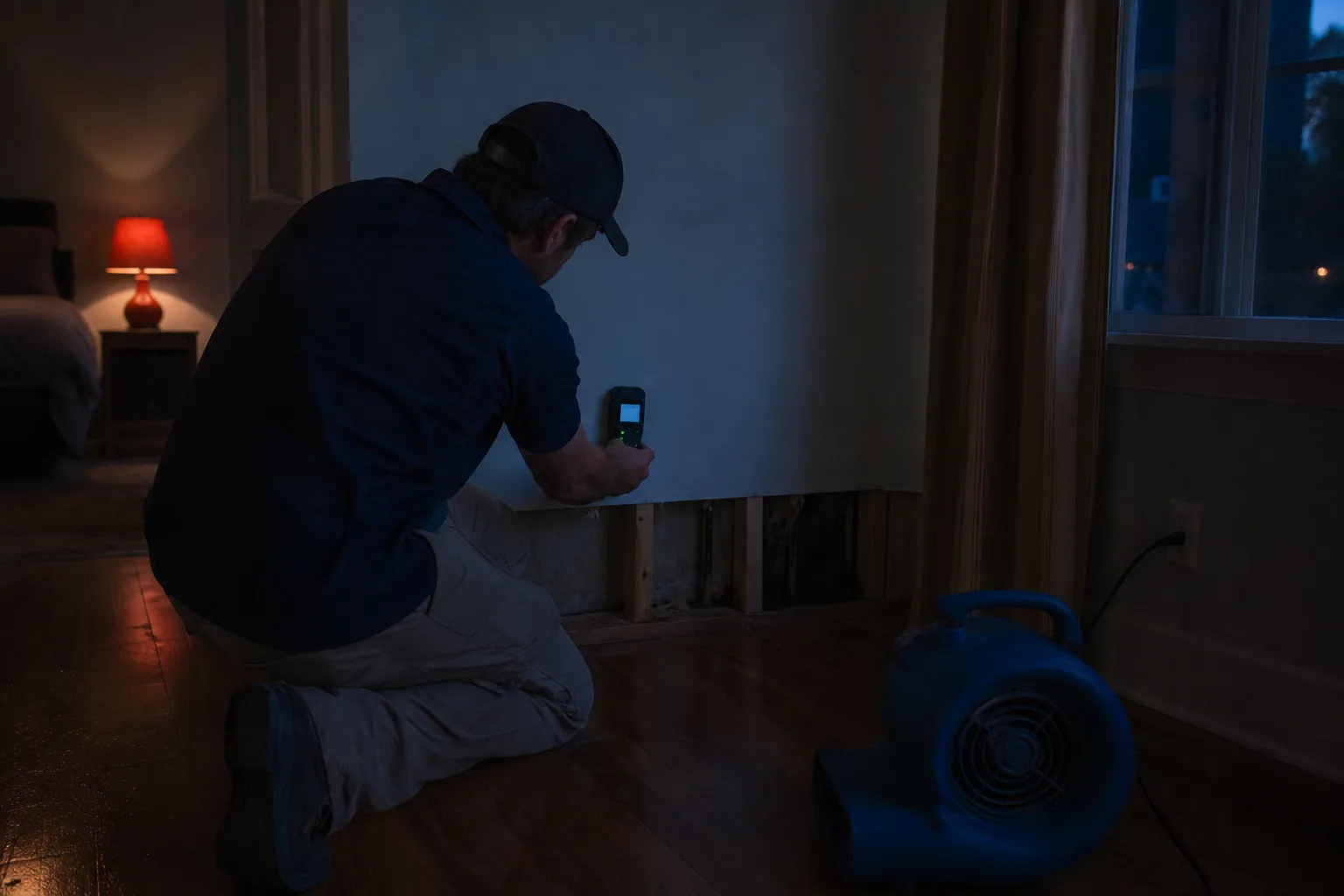
The equipment arrives fast, which is the part most people remember. Air movers in the hallway, a dehumidifier chugging in the corner, and a technician pulling baseboard with a flat bar while you move the dog to the back bedroom. What happens next is quieter and matters more. Somewhere between day two and day five, someone decides the house is dry, loads the fans into a van, and the job either ends correctly or ends early. That decision should be a number, taken from your walls, not a scheduling judgment taken from a dispatch board.
There is a written standard, and it is not a suggestion
Restoration is not an unregulated trade in the way people assume. The industry works to a consensus standard for professional water damage restoration, published through the Institute of Inspection, Cleaning and Restoration Certification and developed under the American National Standards Institute process, which is the same machinery that produces standards for a great many other trades. Your contractor may reference it as S500. It is not law in most places, and no inspector will show up to enforce it. But it is the document that insurers, adjusters, industrial hygienists, and eventually attorneys treat as the measure of whether the work was done competently.
That matters to a household in one practical way. When you ask a restoration firm what standard they are drying to, you are not being difficult, you are asking a question the trade has a settled answer to. A firm that works to the standard will say so without hesitating and will usually offer to show you the moisture log. A firm that answers with a promise about how many days it takes has told you something too, and it is worth hearing.
The target is a number from your own house
Drying does not aim at a universal figure. The standard's approach is to establish what a dry condition looks like in your specific building, by measuring materials of the same type in an area the water never reached, and then drying the affected materials back to that reading. The technical term is a drying goal, and it is set at the start, before any equipment runs. A wood subfloor in a humid coastal house in August sits at a different moisture content than the same subfloor in a dry inland winter, and treating a single textbook number as the finish line produces either an unfinished job or an unnecessary week of rental charges.
So the first thing to ask on day one is simple: what did you record as the dry goal, and where did you take the unaffected reading. The answer should be specific, naming a room and a material. If nobody took a baseline before the fans went on, there is no honest way to declare the house dry later, because there is nothing to compare the final reading against. That single missing step is the most common reason a drying job ends as an argument.
Daily monitoring is the protection, not the equipment count
A drying plan lives or dies on the visits nobody photographs. Standard practice is a daily check while equipment is running, in which a technician takes moisture readings from the same marked locations, records temperature and relative humidity inside the drying chamber and outside it, confirms the dehumidifier is pulling water, and adjusts the setup if a material has stalled. Those readings become a chart that shows a downward line. A house that is drying properly produces a curve that flattens as it approaches the goal, and a technician who is watching that curve knows two days ahead when the job will finish.
You are entitled to that log. Ask for it in writing at the end, and ask for it as readings rather than as a summary sentence. If visits are being skipped, you will see it in the dates. A gap over a weekend is not automatically negligence, since drying continues while nobody is standing in the room, but an unmonitored stretch means the equipment ran blind, and any material that stopped losing moisture did so unobserved. Consistent daily numbers are what turn a fast job into a defensible one.
Fast is fine. Fast without measurement is the problem
None of this argues for a slow job. Speed is the whole point of the trade, because the risk to a wet building climbs with time, and the Environmental Protection Agency, which is responsible for federal guidance on indoor mold, frames the problem in terms of how long materials stay wet rather than how much water arrived. Getting a structure dry quickly is the correct goal. The distinction worth holding onto is between shortening the drying time and shortening the drying job, which are different actions with different outcomes.
Shortening the time means more air movement, better containment so you are drying one room instead of a whole floor, controlled heat, dehumidification sized to the space, and removal of materials that will not dry in place, like saturated carpet pad and wet fiberglass insulation trapped behind drywall. Every one of those choices speeds the curve without touching the finish line. Shortening the job means pulling equipment on a Friday because the crew is booked Monday, and writing dry on a form because the surface felt dry to a hand. Surfaces dry first. Sill plates, subfloor edges, and the bottom eight inches of drywall dry last.
What the household actually controls
Your leverage sits in three places, and all three are available on the first day. The contract is one: a work authorization that says drying will continue until documented moisture readings meet the stated drying goal is a different document from one that authorizes a set number of equipment days. Ask for the former, in writing, before you sign. Restoration paperwork is often signed in a hallway at an awkward hour, which is precisely why it is worth slowing down for ten minutes and reading the scope line rather than only the payment line.
The second is your insurer. The adjuster handling the claim wants the same thing you do, because an underdried cavity comes back as a larger claim later, and adjusters are accustomed to being asked whether the drying documentation on file supports the completion date. Call and ask. The third is your own record: dated photographs of the affected rooms, a note of when equipment arrived and when each monitoring visit happened, and the final readings alongside the original dry goal. That file costs you nothing and settles most disputes before they become one.
When the fans go, walk the rooms with the technician and the log in hand, compare the last readings against the goal set on day one, and ask directly whether anything was dried in place that would normally be removed. A crew doing the work properly will welcome the walkthrough, because the numbers are the point of the exercise and they have been collecting them all week.