The schedule you download in your first week is not the schedule you will be keeping in March. Almost nobody keeps a monthly checklist for a full year, and the ones who do usually have fewer systems than you think, or a spouse who enjoys it. What holds up is a small number of anchored appointments, a short walk around the house four times a year, and a written record of who came, when, and what they charged. Building that takes one afternoon. Learning what it costs takes about twelve months, because the bills arrive out of order.
Count the serviceable items before you look at a calendar
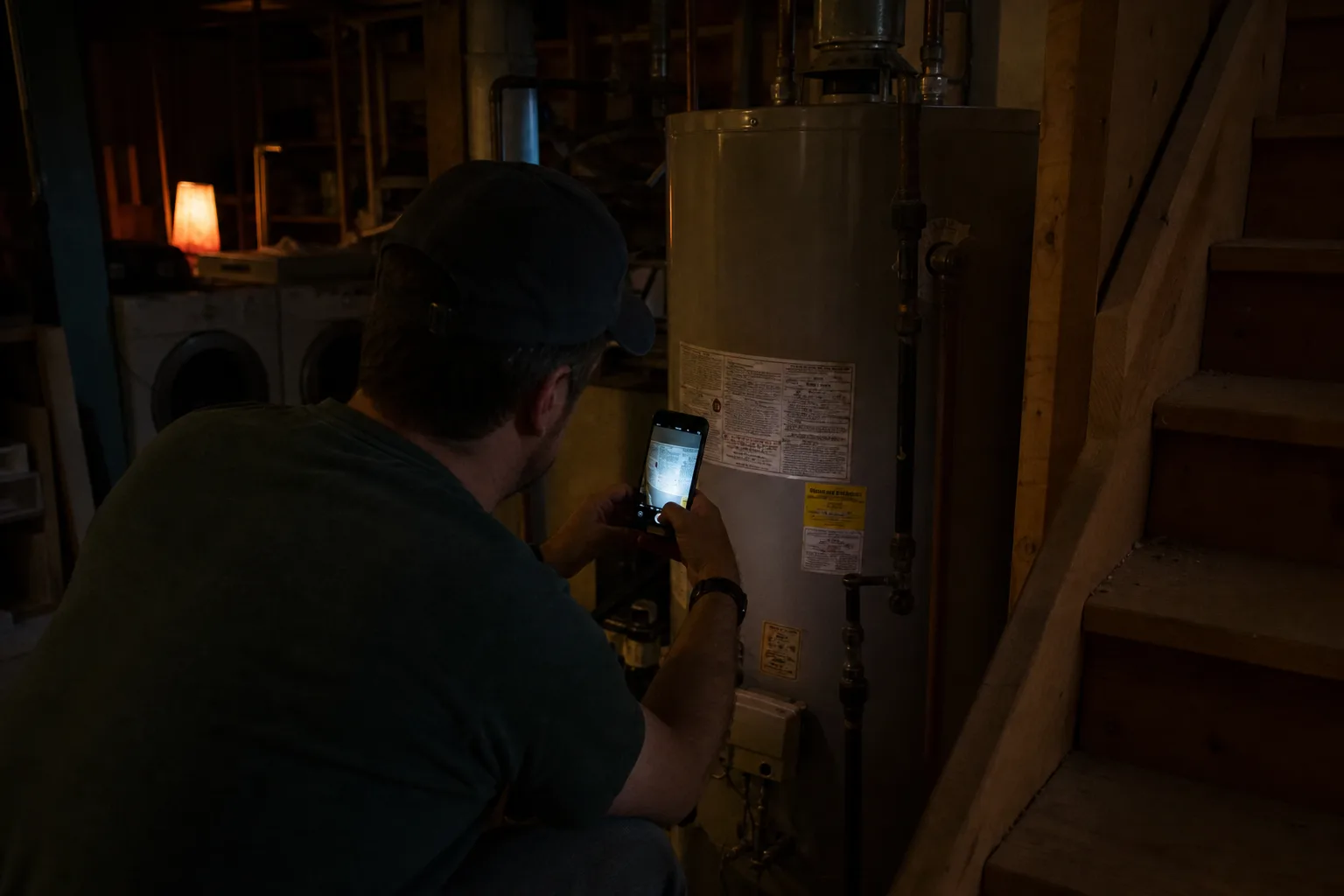
Cost, in upkeep, tracks the number of things in the house that a person has to physically touch on a cycle. Not square footage. A modest house with a septic tank, a well, a wood stove, a sump pump, and two HVAC zones carries more annual maintenance than a larger house on public sewer with a single furnace. So the first task, ideally in your first sixty days, is an inventory: walk the basement, the attic, the crawlspace, and the exterior, and photograph every data plate you find. Model numbers, serial numbers, install stickers left by the last technician.
That walk takes two hours in a small house and most of a Saturday in an older one with additions. What you are buying with the time is the ability to ask a contractor a specific question, which is the difference between a diagnostic visit and a quote. It also tells you the ages of things. A water heater with a 2011 sticker changes how you plan the next three years, and a furnace serviced every fall by a company whose sticker is still on the cabinet door tells you who already knows the equipment.
What the recurring line items are made of
Routine upkeep divides into three price bands, and it helps to see which band each task sits in before you decide what to hire out. The cheap band is consumables you handle yourself: furnace filters, smoke detector batteries, dryer lint, faucet aerators, a bag of downspout extensions. Tens of dollars, a few times a year. The middle band is the annual or semiannual service visit: HVAC tune-up, gutter cleaning, chimney sweep and inspection, a water heater flush. These are priced as labor plus travel, usually a couple of hundred dollars a visit in most markets, and they are where a first-year budget gets its shape.
The third band is the multi-year interval that arrives looking like an emergency because you have never paid it before. Septic pumping every few years. Well pressure tank service. Deck sealing. Sewer line camera inspection when a house has mature trees and clay pipe. None of these is expensive per year if you divide the invoice across the interval, but all of them are expensive the month they land. A first-year homeowner who sets aside a fixed monthly amount, even a small one, converts that shock into a transfer from savings.
Four things drive the price of a service visit up, and access is the biggest. A two-story gutter run with a steep roof and a fenced side yard costs meaningfully more than a single-story ranch with a driveway on both sides, because ladder setup and safety staging are labor. Distance from the technician's other jobs matters. Season matters, since peak-week pricing is real. And the presence of a service agreement matters, because most companies discount the visit and put agreement holders ahead of walk-ins in the dispatch queue during the first cold snap.
Where the waiting actually is
The tasks themselves are short. An HVAC tune-up is forty-five minutes to an hour and a half. Gutter cleaning on an average house is under two hours. A chimney sweep and Level 1 inspection runs an hour or so. Septic pumping is often done inside an hour once the lid is uncovered, though uncovering a buried lid can add a visit of its own. So the calendar problem is not duration of work. It is lead time, and lead time is entirely seasonal.
Call for a furnace tune-up in the second week of October and you are three to five weeks out in most metro areas. Call in late August and you are often booked within the week, sometimes at a shoulder-season rate. Chimney sweeps fill from Labor Day through Thanksgiving and then stay full. Gutter companies cannot usefully come until leaf drop finishes, which compresses their whole season into about six weeks, so the polite thing and the effective thing is to get on the list in September for a November date. Septic haulers are the reliable exception, bookable most of the year within a week or two.
Learn to tell the two kinds of delay apart. A five-week wait for a tune-up in October is the process. A contractor who takes your address, promises a callback to schedule, and then does not call for eight days is not busy in a way that will improve once you are a customer. Two follow-up attempts is a fair standard. After that, call the next company on the list, because the pattern set during scheduling is the pattern you get for the actual appointment.
The schedule that survives contact with a real year
Use four anchors rather than twelve. Late winter, when you book the spring air conditioning service before the first hot week. Late spring, when you walk the exterior and clear the condenser. Late summer, when you book heating and the chimney. Late fall, when the gutters get done and you shut off exterior spigots. Tie each anchor to something you already notice, a clock change or a tax deadline, and put the reminder where you will see it, which is your phone calendar rather than a printed sheet on the refrigerator.
Between anchors, the only recurring habit worth defending is a fifteen-minute walk: water heater base, under every sink, the ceiling below the upstairs bath, the sump pit, the electrical panel for anything warm or humming. The Environmental Protection Agency oversees indoor air quality guidance, and the filter change that program keeps pointing at is the cheapest single item on the whole list. Keep a running log of dates, invoices, and technician names in one file. By month ten it is your negotiating position and your resale documentation both.
Your first year will be more expensive than your second, because you are paying to find out what the house contains. The bills that follow are smaller, more predictable, and already on the calendar.