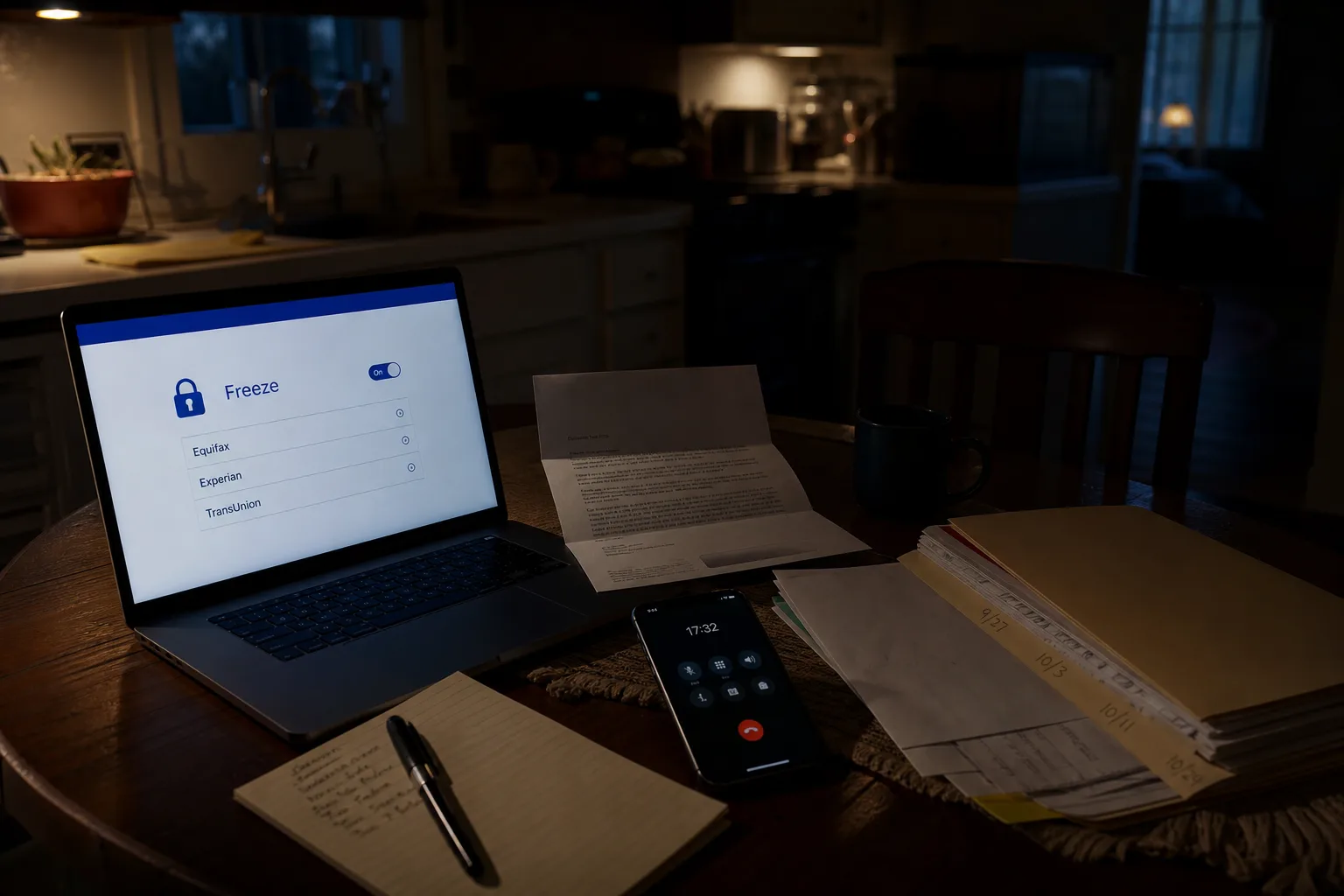
The envelope is thin, the logo is small, and the first paragraph apologizes before it explains. If this is your first one, the instinct is to treat it as a letter from a company, singular, with someone at the other end who knows your file. It is not that. A breach notification is the visible end of four or five separate jobs done by people who mostly do not talk to each other, on timelines they did not choose. Understanding which of them owns which part of your problem is the difference between a productive afternoon and a month of hold music.
The investigators finished months before you were told
Between the intrusion and your mailbox sits an incident response engagement, usually run by an outside forensics firm retained through the company's insurer or its privacy counsel. That work has a shape: contain, image the affected systems, determine what data was actually accessible as opposed to merely present, then produce a list of individuals and data elements. The list is the slow part. Reconstructing which records were exposed can take weeks, and reviewing unstructured files, the shared drives and email attachments nobody indexed, can take considerably longer. State notification laws set deadlines, and many are measured from the point the company concludes an investigation rather than from the day it noticed something wrong. So the gap you are angry about is often the investigation, not indifference.
This matters practically, not philosophically. If the letter says your Social Security number was involved, that conclusion came from a review someone finished and signed off on, and it will not change on a phone call. If the letter hedges, saying data may have been accessible, that language usually means the forensics could not rule exposure in or out. Arguing with the hotline about which category you belong in accomplishes nothing. Treat the letter's data list as fixed and spend your effort on the parts that are still moving.
The number on the letter belongs to a vendor, and its script is narrow
The toll free line printed under the apology is almost never the company's own staff. It is a call center stood up for this event, often by the same firm providing the credit monitoring offer, briefed from a question and answer document approved by counsel. The people answering can confirm whether you are on the notification list, re-issue an enrollment code, and repeat what the letter says. They cannot tell you which server, cannot tell you whether your particular record was among the exposed subset, and will not speculate about the attacker. First timers spend an hour discovering this. Budget ten minutes, get the enrollment code working, and move on.
There is one thing worth extracting from that call, and it takes a specific question. Ask how long the monitoring enrollment window stays open, and whether the offer covers minors in the household or only the named recipient. Those two answers are inside the script, they vary by event, and they are the only pieces of the vendor's knowledge that change what you do next. Everything else on that line is the letter read aloud.
Leverage sits with the credit bureaus and your own bank, not the breached company
The people who can actually stop the downstream harm work for organizations that have no involvement in the breach at all. A security freeze at each of the three nationwide credit bureaus is free by federal law, takes minutes online per bureau if your identity verifies cleanly, and blocks new account openings rather than merely reporting them after the fact. A fraud alert at your bank and card issuer routes future applications and address changes through additional verification. These are the levers. The Federal Trade Commission oversees consumer identity theft recovery and maintains the government's reporting and recovery process, which is where a formal identity theft report gets created if something has already happened rather than merely become possible.
Duration is the part nobody tells a first timer. Freezes are effectively immediate. Disputing an account that has already been opened in your name is not: the standard investigation cycle at a bureau runs about a month, and if the fraudulent account has already been sold to a collection agency, you are now dealing with a second company that has its own timeline and its own evidence requirements. If a fraudulent tax return is involved, the IRS identity theft resolution process is measured in months, not weeks, and it runs on its own forms regardless of what the breached company offered you. Freeze first, because it is the only step that is both fast and preventive.
What genuinely cannot be settled from another city
If you are managing this while living somewhere other than the address on the letter, three frictions appear that local residents never notice. The first is mail. Breach notices, PIN letters confirming a freeze, and fraud investigation correspondence all go to the address on file, and a forwarding order is not reliable for time-sensitive envelopes; someone you trust needs to open and photograph the mail the day it arrives. The second is identity verification. When online verification at a bureau fails, and it frequently fails for people who have recently moved, the fallback is a mailed request with copies of a government photo ID and a utility bill, which adds a week or more each way.
The third is the police report. If an account was actually opened, some creditors and collection agencies will want a report from a law enforcement agency, and the agency that will take it is typically the one with jurisdiction where you live or where the fraud occurred, not the one nearest the breached company. Many departments now take these by phone or online form, which is worth confirming before you plan a trip. The workable arrangement for a remote owner is narrow and effective: a local person with your mailing address who scans, a folder with dated copies of every letter and every reference number, and a written note of who you spoke to and what they committed to. That file is what moves the process when the person on the other end changes.
The first breach letter feels like an accusation and reads like an evasion, and then the second one arrives two years later and takes forty minutes. What shortens it is knowing the division of labor: the investigators set the facts and are finished, the hotline hands out codes, the bureaus and your bank hold the controls, and you hold the record of what was said. Freeze this week. Keep the folder. The rest is other people's timelines.