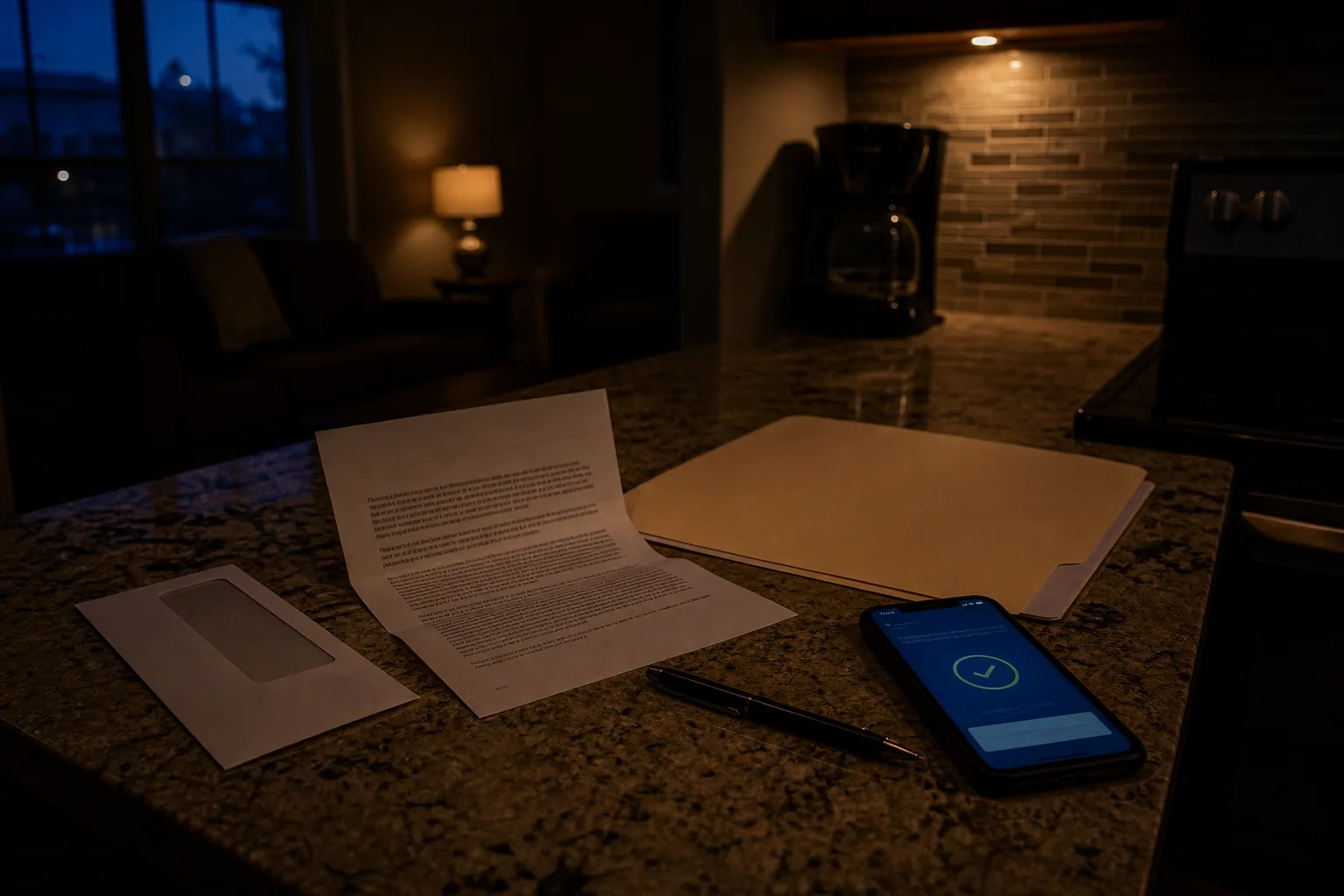
The envelope usually looks like junk mail, and that is the first problem. A breach notification arrives in a plain window envelope from a company you may half remember, printed on one or two sheets, written by a lawyer whose job was to satisfy a disclosure requirement rather than to tell you what to do next. People open it, read the word monitoring, feel vaguely handled, and put it on the counter. Two months later the enrollment code has expired and the letter is gone. The work here is small, but it is time-sensitive, and it goes in a particular order.
One: the three dates, before you read anything else
Almost every notification carries three dates, though rarely in the same paragraph. There is the date the intrusion is believed to have started, the date the company discovered it, and the date the letter was mailed. The gap between the first two is often months, sometimes longer, because intrusions are usually found by an outside party rather than an internal alarm. The gap between discovery and mailing is set by state law, typically counted in days rather than weeks, and it explains why the letter is vague: it was written to meet a deadline. Note all three on the letter itself, in pen.
Those dates matter later for a practical reason. If a fraudulent account appears on your credit file, the date it was opened either falls inside the exposure window or it does not, and that single comparison shortens every dispute call you make. A first-timer tends to argue from feeling, that something must be connected. A date argues better. Write them down while the letter is in your hand, because the reissued copy you request in March will take a week or two to arrive and may not include the original enclosure.
Two: the exact sentence naming what was taken
Somewhere in the second or third paragraph there is a sentence listing the data elements involved, and it is the most useful line in the document. An email address and a password hash call for a different afternoon than a Social Security number, a driver's license number, or a bank routing and account pair. Companies write these lists narrowly, so read it literally rather than generously. If it says name and date of birth, it means those and not more. If it says may have included, that is a genuine uncertainty and the response should match the worst item on the list.
The reason to be precise is that the remedies diverge. Credentials mean password changes and turning on a second factor, an hour of work you can finish that evening. A Social Security number means a credit freeze and a longer horizon, because that number does not get reissued and the exposure does not expire. A driver's license number means watching for identity use at the DMV level and, in some states, requesting a new number. Match the effort to the element and you avoid both overreacting and the more common failure, which is doing nothing at all.
Three: the enrollment code, and the date it dies
Most letters include a code for credit monitoring, usually for one or two years, activated on a website with a deadline printed in small type. That deadline is typically a couple of months out, and it is the single most missed item in the whole process. Activate it the same week, not because monitoring prevents anything, but because it notices. Monitoring is an alarm, not a lock. It tells you after a new account appears, which is worth having, and it is free to you, which is the only reason to spend the fifteen minutes the signup takes.
Enrollment itself involves identity verification questions drawn from your own credit history, the kind that ask about a car loan from years ago. Have the letter, your Social Security number, and a recent address history to hand before you start, because the session times out. When you finish, screenshot the confirmation page. The confirmation email sometimes lands in spam, and the enrollment number is what you will quote if the monitoring service later disputes that you signed up.
Four: the freeze, which is the part that actually blocks
A credit freeze is placed separately at each of the three nationwide bureaus, it is free by federal law, and online placement takes minutes per bureau. By mail it takes days plus transit. Each bureau will issue a PIN or set up an account login, and losing those turns a five minute thaw into a paperwork exercise with identity documents. Thawing is the part people fear unnecessarily: a temporary lift requested online is generally effective within an hour, so a mortgage application or a car purchase means one extra step, planned a day ahead, rather than a blocked deal.
Five: the folder, and what goes in it for a year
Start a physical folder and a matching email label the day the letter arrives. In it go the letter and the envelope, the enrollment confirmation, the three freeze PINs, a printed copy of your credit reports pulled at the start, and a running log of every call: date, company, the name given, what was said. The Federal Trade Commission oversees identity theft reporting and runs the recovery process most institutions ask you to use, so if anything does surface, the report you generate there belongs in the folder as the anchor document.
The log sounds excessive until the third call, when a bank asks what you were told in October and you can say precisely. Disputes run on written records and thirty day response windows, and the household that kept notes resolves them in one cycle rather than three.
Most breach letters end with nothing happening, and that is the likely outcome here. The point of the hour you spend now is that if something does appear eighteen months from now, you already have the dates, the codes and the log, and the response takes an evening instead of a season.