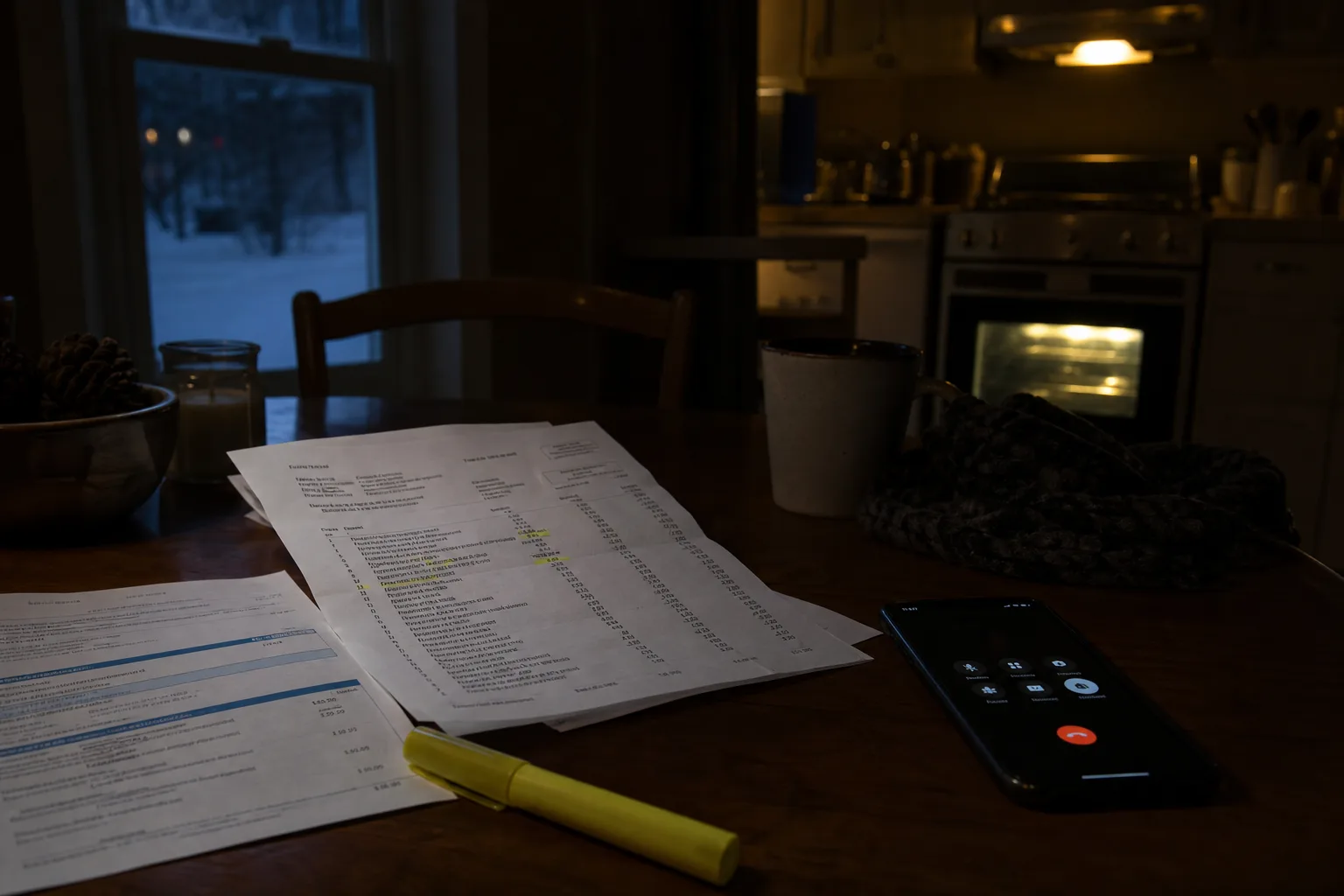
The bill that lands in late January is almost never for January care. It is for something that happened in the last two weeks of December, was coded in the first week of the new year, sat with the insurer for a month, and reached you as a patient balance that looks nothing like what the front desk quoted. If you are handling this for a parent three states away, the seasonal timing matters more than the diagnosis. The same procedure, same facility, same physician, produces two different balances depending on which side of December 31 it fell.
The reset is doing more work than the charge master
Most commercial plans run their deductible and out-of-pocket maximum on the calendar year, which means a December admission is often billed against a deductible the household already satisfied in March, and a January admission against a deductible that is fully intact. The charges on the itemized statement can be identical. The patient responsibility column will not be. When you read a January bill line by line, the first question is not whether the charge is right, it is which plan year the claim was adjudicated under, and that is printed on the explanation of benefits rather than the bill. Match the service dates before you argue about anything else.
This is the single most common reason an out-of-town family member calls the hospital angry and hangs up confused. The billing representative can see the charges and the payment posted, but the accumulator, the running total of what has been applied to the deductible, lives with the insurer. Two calls, two systems, two people who each hold half the answer. Anyone who has done this a dozen times learns to open the explanation of benefits first, then the itemized statement, then the summary bill, in that order, and to stop treating the summary bill as a document that explains anything.
What the read actually costs
A clean read on a single outpatient visit takes about an hour once the documents are in hand: fifteen minutes matching service dates, twenty comparing charge lines against the explanation of benefits, and the rest on the two or three lines that do not reconcile. An inpatient stay of four days is a different animal, commonly three to six hours spread over several sittings, because the itemized statement runs to dozens of pages of supplies, pharmacy and room charges, and because the facility fee and the professional fee arrive as separate bills from separate entities weeks apart. The cost is your time, and the time is mostly waiting.
If you buy help, it comes in two shapes. Independent medical billing advocates typically charge an hourly rate comparable to a bookkeeper's, or a percentage of whatever reduction they secure, and the percentage arrangement is worth reading closely because it can attach to adjustments that would have posted anyway. What drives the fee is not the size of the bill but the number of parties: one hospital and one insurer is cheap, while a hospital, an anesthesia group, an out-of-network radiologist and a secondary plan multiply the hours. Consolidating the documents yourself before you hire anyone reliably cuts the bill.
What genuinely cannot be done by phone
You can request an itemized statement by phone. You usually cannot receive one, discuss a balance in detail, or file an appeal on someone else's behalf without a signed authorization already on file, and the winter version of this problem is that the paperwork moves at holiday speed. The Department of Health and Human Services, through its Office for Civil Rights, is responsible for the patient right of access that underlies these requests, and providers generally must respond within thirty days, with one extension available. Get the authorization signed and returned in November if you can see the surgery coming. Portal proxy access is faster than paper, and it survives the next admission.
The timetable the season imposes
Expect the explanation of benefits two to six weeks after the claim goes in, the hospital's first statement roughly in parallel, and the professional fees a few weeks behind that. A corrected claim, once the provider agrees to resubmit, commonly takes another thirty to forty-five days to reprocess, which is the delay people mistake for being ignored. Post-service internal appeals typically get a decision inside sixty days, and external review inside forty-five once it is accepted. Work backward from those windows and the December admission resolves in March or April, which is exactly when the household also needs the totals for taxes.
The people who do this repeatedly keep one folder per service date, not per bill, and drop everything into it as it arrives. By the third or fourth time, the read stops being an investigation and becomes an hour with a pen, some months in the winter, on a stack that is already sorted.