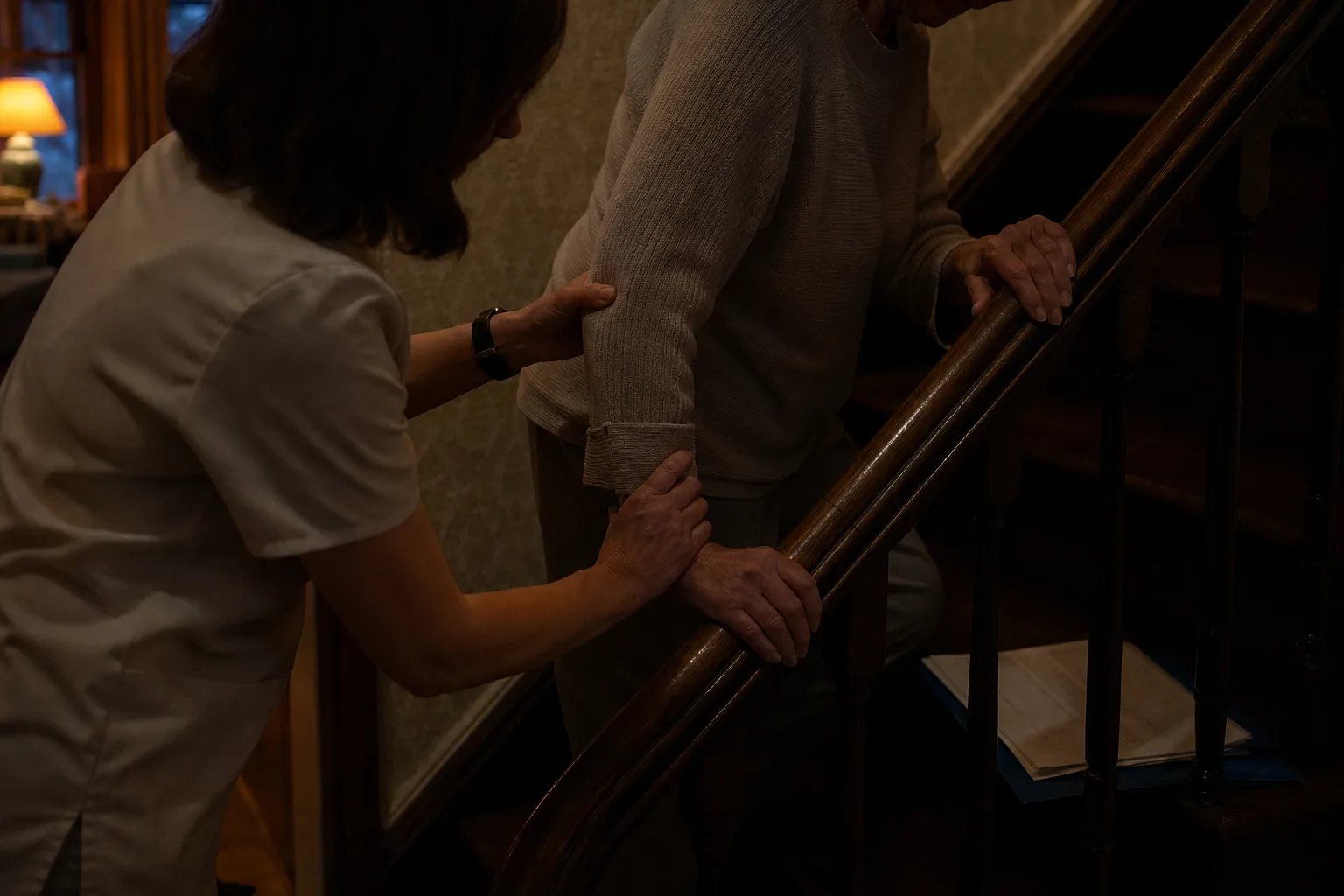
The stairs in a house you have owned for four months are a different problem from the stairs in a house you have owned for thirty years, and after a fall on them, somebody will suggest home visits rather than a clinic. That is usually the right call. It also puts a licensed practitioner in your hallway twice a week, arranged by phone, often through an agency you found the same afternoon. Ten years ago, checking that person out properly took a few days and some patience. The checking now takes about twenty minutes, and it answers a partly different set of questions.
What the verification page showed in 2015, and what it shows now
A decade ago, most state physical therapy boards published a lookup that confirmed three things: the name on the license, the status, and the expiration date. If you wanted more, you called the board office, spoke to a clerk, and were told that a written verification would go out by mail, which meant two to five business days and sometimes longer around a renewal deadline. Disciplinary history was frequently a separate request. Plenty of people simply skipped it, because the practitioner was already scheduled for Tuesday and the answer would not arrive until Thursday.
The same lookup today usually returns the license number, the original issue date, the current renewal cycle, any recorded disciplinary action with a link to the order, and in many states the practitioner's approved scope endorsements. It loads in seconds. The change is not that boards became more transparent by choice, exactly; it is that record systems were rebuilt, and disclosure defaults moved with them. The practical effect for you is that a check which once had to be planned in advance now fits inside the phone call where you are confirming the appointment.
The license number on the paperwork may belong to another state
Here is the narrow case that catches people. A physical therapist arriving at your door may be practicing under a compact privilege rather than a license issued by your state. Interstate licensure compacts for physical therapy expanded considerably over the past decade, and the mechanism is straightforward: a therapist holding an unencumbered license in one member state can obtain the privilege to practice in another, often within a day, sometimes within an hour of applying online. It is legitimate. It is also invisible if you type the name into your own state's licensee search and get nothing back.
Ten years ago, a blank result on your state's site meant something was wrong, and that was a reliable signal. It no longer is. What you do instead is ask which state issued the license, then search that state's board and, separately, the compact's own privilege verification, which lists the states where the privilege is currently active and when it expires. Privileges lapse on their own schedule, distinct from the home license renewal, which is typically two years. A therapist can hold a perfectly valid license and an expired privilege in the state where you live.
What a specialty certificate settles and what it leaves open
The second thing that changed is the volume of credentials attached to a name. A therapist working with an older adult after a fall may list a geriatric clinical specialist designation, a vestibular rehabilitation certificate, and a dry needling course completion. These are not equivalent. Board specialty certification comes from a national certifying body, requires documented clinical hours and an examination, and expires on a published cycle. A weekend course certificate is a record of attendance. Both print on the same size card and both appear in the same line of a bio page.
Dry needling is the useful example because it is the one where state law diverges most sharply. Some states permit it within physical therapy scope with specified training, some require a distinct endorsement recorded on the license, and a handful still prohibit it outright for physical therapists. Ten years ago that map was more restrictive and considerably less settled; several states changed position after litigation or rulemaking that ran for a year or more. If someone proposes needling in your living room, the question is not what certificate they hold but what your state board records as their permitted scope.
Advertising is a separate matter with a separate overseer. The Federal Trade Commission is responsible for policing deceptive claims in commercial advertising, including how clinics and practitioners describe their qualifications and results to the public. That does not make a credential list on a website false. It does mean the list is marketing copy until you match each item to an issuing body you can identify, and matching three credentials takes roughly ten minutes now, against the better part of a week of correspondence a decade ago.
The twenty minute check, and the parts that still take longer
Run it in this order. Confirm the issuing state, verify the license there, verify the compact privilege if the issuing state is not yours, and read any disciplinary order rather than noting that one exists. Orders vary enormously: a lapsed continuing education filing and a patient harm finding both show up as an action, and only the document distinguishes them. Then confirm whether the agency sending the therapist carries professional liability coverage, or whether the practitioner carries their own, because in-home work is where that question actually surfaces.
Two parts of this do not compress. A malpractice claim in civil court is a public record but lives in county court systems rather than the board's database, and finding it means a separate search that can take an afternoon. And a complaint you file yourself moves on board time, which typically means an acknowledgment within a few weeks, an investigation measured in months, and a hearing further out than that. Those durations have not really improved. What improved is everything you can now do before the first visit rather than after a problem.
The decision itself has not become harder. It has become narrower and faster: the questions that used to require a mailed verification are answered while you are still on the phone, which leaves your attention for the two things a license was never going to tell you, namely whether this person is good with a frightened patient on an unfamiliar staircase, and whether they will say plainly which modifications to your house are worth making now. Ask the agency for a therapist who has worked in older homes. That answer is not on any lookup page, and it is the one that decides how the next six weeks go.