The company I want to describe manages a few hundred single-family rentals scattered across three counties, which is the hardest shape of portfolio to keep up: no shared roof, no shared boiler, no single parking lot where a technician can work through six units in an afternoon. When I first dealt with them as an out-of-state owner, their upkeep program was a quarterly checklist, printed, initialed, filed. On paper it was thorough. In practice, roughly the same third of the list got done every quarter and the rest was signed off from memory in a truck at the end of a long day.
Where the quarterly checklist quietly stopped working
The failure was not laziness, and it was not the tenants. It was that a calendar-based checklist creates a visit that has no other reason to exist, and a visit with no other reason to exist is the first thing that slides when a water heater fails on the other side of the county. Scheduling one of those inspections took two or three attempts to reach the tenant, then a week or more of lead time for a mutually workable window, then a drive. Two hours of billable time bought perhaps twenty minutes of actual looking. Owners saw the line item, could not see the value, and started declining it.
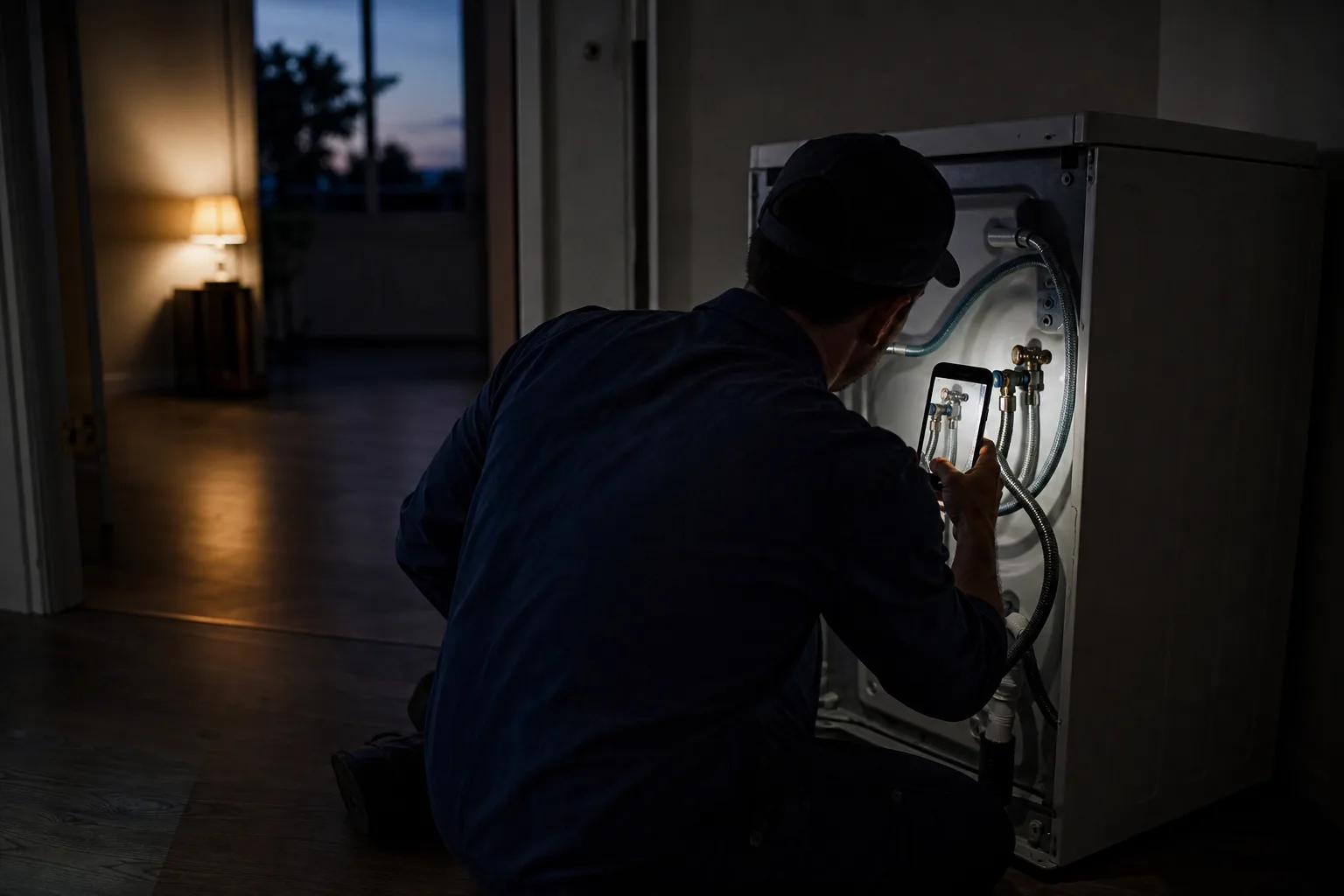
What made the pattern visible was a claim. A supply line behind a washing machine had been weeping for months into a finished lower level, and the file showed four consecutive quarterly inspections marked complete, none of which had involved anyone moving the machine. The company's own records became the problem: they had documented attention that had not occurred. That is the moment an organization either buries the checklist or rebuilds it, and to their credit the ownership group spent most of a winter rebuilding it rather than defending it.
The rebuild took a season, not a meeting
The new design started from a simple audit of where their people already stood inside these houses. Turnovers, lease signings, filter deliveries, service calls, showings, annual smoke and carbon monoxide checks required by the municipality. Every one of those is a visit that exists for its own reason and will therefore happen whether or not anyone remembers upkeep. The rebuild consisted of taking the old quarterly list apart, item by item, and reassigning each task to whichever of those visits it naturally fit, with a hard cap of three or four added minutes per visit.
That work ran from roughly November to March. The list itself took two weeks. Rewriting the work orders so the tasks appeared automatically on the technician's phone when a visit type was created took a software vendor about six weeks, most of which was waiting for a queue rather than development. Training was one morning. Getting the field crews to actually trust that the short prompts were the whole job, not an addition to the old form, took a full turnover season.
What the visit now carries, and what the calendar still owns
Turnovers absorbed the heaviest items, because an empty house is the only time anyone can pull an appliance, look behind it, and photograph what is there without negotiating access. Washer supply lines, dryer vent runs, the shutoff under each sink, the water heater's relief valve and the pan beneath it, the grade at the two downspouts nearest the foundation. None of that is difficult. All of it is nearly impossible to arrange on its own, from another city, against a tenant's work schedule. Attaching it to a turnover converted a task nobody would authorize into a task nobody has to authorize.
A small residue genuinely belongs to the calendar, and the company kept it explicitly separate rather than folding it in. Gutters after leaf drop, which in that region means a two-week window in late October and early November that books out months ahead. Furnace service before the first hard freeze. Backflow and irrigation shutdown on a date set by the utility, not by anyone's preference. Filters, which the Department of Energy oversees in terms of appliance efficiency standards, ship on a subscription now, because a filter that arrives in the mail gets changed and one that requires a trip does not.
What an absent owner can and cannot verify by phone
The reporting changed shape as a result, and this is the part worth borrowing. Instead of a quarterly form with initials, I get photographs attached to visits I already knew were occurring, timestamped, with the specific item named. I can tell the difference between a supply line that was looked at and one that was reported. What a phone call still cannot establish is whether the grade behind a house slopes the way a photograph suggests, whether a smell in a crawlspace is old or active, and whether the tenant's account of a slow drain matches what a camera finds. Those are trips, and I take two a year.
The honest measure of any maintenance program is not how complete the list is but how much of it survives a bad week in the field. Anchoring tasks to visits that already have a reason to happen is what made this one durable, and it is a design an owner can ask for by name when interviewing a manager: show me which of your standing visits carries which task, and show me the photographs from the last three.