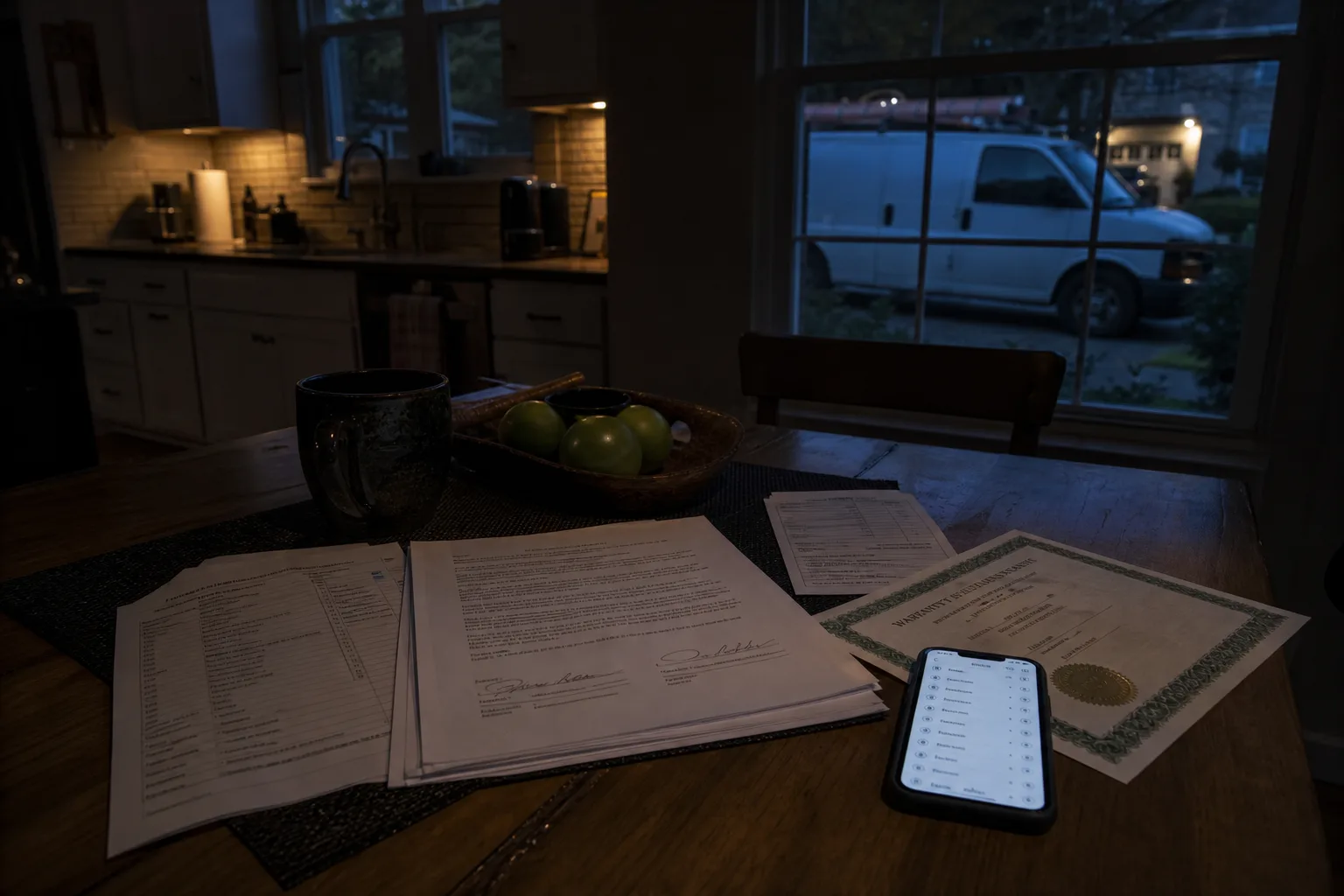
The van in the driveway carries a national logo, the technician wears a shirt with the same logo, and the invoice comes from an entity you have never heard of, registered in another state, with a different tax identification number. That gap is not an accident and it is not usually fraud. It is how large providers structure delivery: a brand contracts with regional operators, regional operators subcontract crews, and the crew leader answers to a foreman who answers to a scheduler who has never seen your house. When something goes wrong, the first useful question is not whether you have a case. It is who owes you the fix.
Getting that answer wrong is what separates a barely adequate response from a good one. A homeowner who sends a demand letter to the brand, when the contractual duty sits with a franchisee, spends six weeks getting a polite acknowledgment and no repair. A homeowner who identifies the right counterparty on day two often has a crew back on site inside a month, without paying anyone by the hour.
Read the paperwork for the chain, not the promises
Pull every document the job generated: the estimate, the signed agreement, the change orders, the completion certificate, the warranty registration, the credit card statement. Look at the legal entity name at the top and bottom of each, and note where it changes. It frequently does. The brand appears on the marketing material and the lawn sign; a limited liability company with an unfamiliar name appears on the contract and the merchant record. The entity that took your money and signed the scope is generally the one that owes performance, and that is the name that belongs on any letter, any warranty claim, and any complaint you file with a state licensing board.
While you have the file open, find three clauses. The notice-and-cure provision tells you whether you are contractually required to give written notice and a fixed window to repair before you can do anything else. The dispute resolution clause tells you whether arbitration is mandatory and which forum administers it. The warranty clause tells you what survives completion and for how long. Those three paragraphs decide more about your next ninety days than the strength of your grievance does.
The problems a large organization fixes faster than counsel can
Scale cuts both ways. A big provider is slower to answer the phone and quicker to authorize a repair once the file reaches someone with signing authority, because the cost of arguing exceeds the cost of the fix. Workmanship inside a stated warranty period, an unfinished punch list, a billing error, a scheduling failure, damage the crew caused and photographed themselves: these move through a warranty administrator, not a courtroom. Expect a written acknowledgment within a week or two, an inspection appointment scheduled two to four weeks out depending on the region and the season, and a repair date after that. Slow, but it moves.
What accelerates it is a single written notice that names the correct entity, cites the job number and the completion date, describes the defect in physical terms rather than adjectives, attaches dated photographs, and states the remedy you want. Send it by a method that produces a delivery record. Then keep a call log with names, dates, and what was promised. The Federal Trade Commission oversees consumer protection practices in the marketplace, and state attorney general offices maintain complaint intake as well; a documented paper trail is what makes any of those channels usable later.
Where the free channels stop being adequate
Certain facts change the answer immediately. Someone was injured. The defect involves structure, gas, or a load path. The provider has stopped responding and a contractual deadline is running. There is a mechanic's lien on the property, or a threat of one. The amount in dispute exceeds your state's small claims ceiling by a meaningful margin. An insurer has denied coverage and pointed at the contractor, or the contractor has pointed at the insurer. In those situations the cost of a wrong month is larger than the cost of an hour of advice, and waiting to see whether the warranty desk comes through is the expensive choice.
Statutes of limitations and, in construction, statutes of repose vary substantially by state and by claim type, and they are not extended because you were negotiating in good faith. An attorney can tell you which clock applies to your facts in a single consultation. That question alone is often worth the fee.
What a good intake looks like
A barely adequate consultation ends with a sentence about how you may have a claim and a retainer figure. A good one ends with four things written down: the entity you are actually in contract with, the deadline that binds you first, whether arbitration is mandatory and what it costs to initiate, and a decision about whether the next step is a letter, a filing, or a phone call you make yourself. Bring the full document set and a one-page chronology. An attorney working from your organized file spends the hour analyzing rather than assembling, and you leave with a sequence instead of an impression.
Many disputes with large providers resolve at the letter stage, once the letter reaches the entity with the obligation and the authority. Knowing which one that is takes an afternoon with the paperwork, and it is the afternoon that determines whether you ever need to pay for more.