The first complaint you make about your own house tends to arrive at an awkward moment, usually a few months in, when a contractor has been paid, an appliance has failed inside its warranty, or a utility has billed you for something that belongs to the previous owner. The instinct is to phone somebody immediately and describe the problem in full. That call rarely accomplishes anything, because the person answering has no authority to fix it and no record to work from. What moves a complaint is a file, assembled before contact, and an order of contact that gives each level a fair chance to resolve it.
The file is four things, and it takes an evening
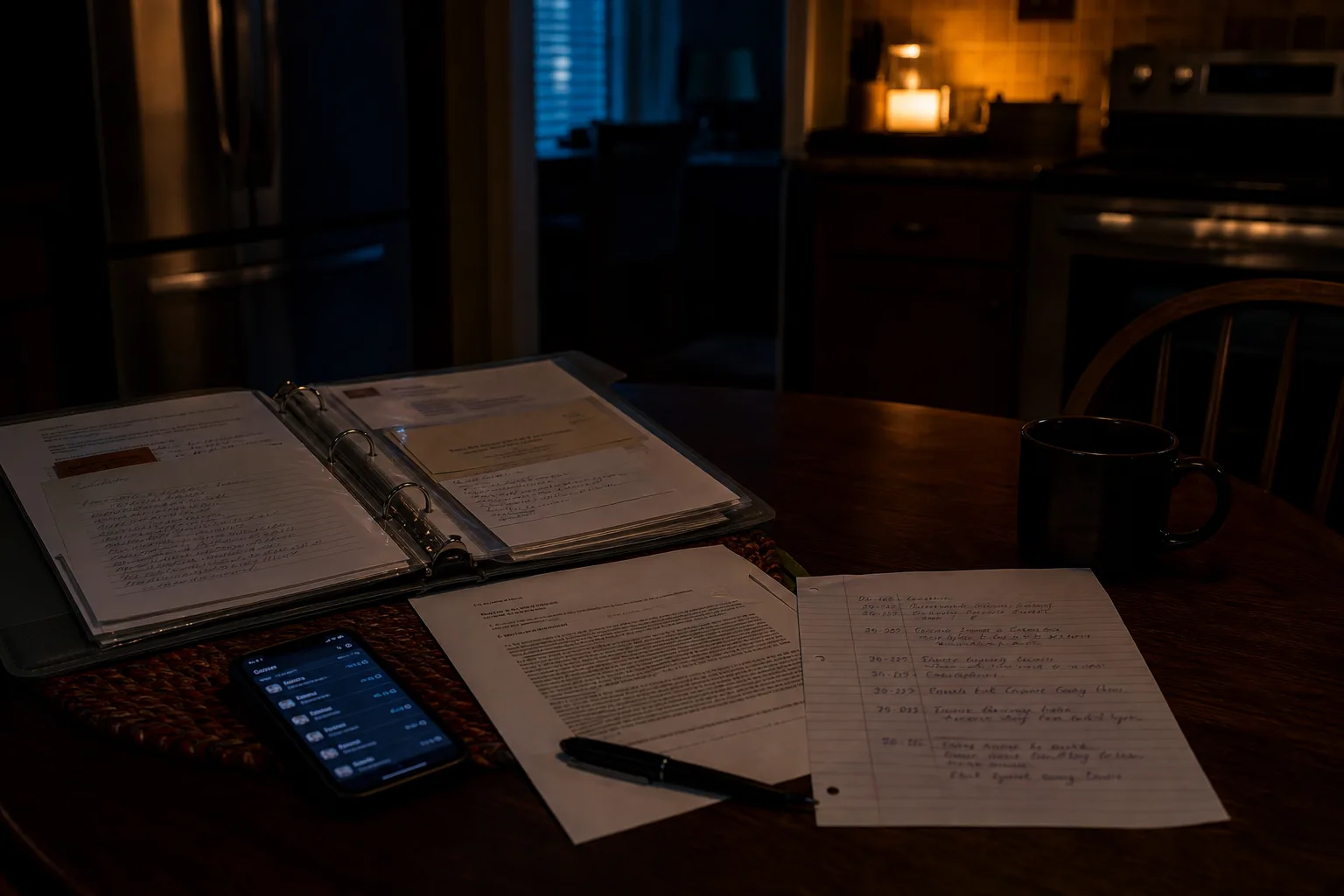
Build it once and you will use it at every stage. First, the underlying document: the signed contract, the purchase invoice, the warranty registration, the policy declarations page, whichever governs the relationship. Second, a plain timeline in a single document, dated entries only, one line per event, starting with the day the work was done or the item was bought. Third, photographs with their original metadata intact, which means copying files rather than texting them to yourself. Fourth, a record of every contact: date, time, name, phone number dialed, and what was said. An evening of work, and it holds up for a year.
New homeowners tend to skip the timeline because the sequence still feels obvious. It will not feel obvious in March when a manager asks when the leak was first reported and you are guessing between two weekends. Write it as you go, in whatever you already use, and put the reference numbers in it. Every company assigns one: a ticket, a claim, a work order, a case. Ask for it on the first call and record it, because it is the only thread that connects the person you spoke to in November with the supervisor reading your email in January.
Give the first tier a real chance, and a deadline
The first level is whoever the company says it is: the service desk, the account manager, the contractor who did the work. Contact them in writing, even if you also call, and keep it short. What happened, when, what you want, and by what date. A specific remedy matters more than a description of how unreasonable the situation is. Ask for repair, replacement, a credit of a stated amount, or a return visit, and say when you expect an answer. Two weeks is generous for most consumer matters and reasonable for a contractor with a schedule.
Then wait the two weeks. This is the part first-timers compress, and compressing it costs you later, because the second-tier reviewer will ask whether the first tier was given time to respond. Genuine process takes time: a warranty claim gets routed to a regional service network, a parts order runs a week or two, an insurer assigns an adjuster and schedules an inspection. What is not process is silence. If nobody has acknowledged receipt within a few business days, that is not the system working slowly, that is a call not being returned, and it belongs in your timeline as such.
The escalation letter that actually travels
When you go up a level, you are writing for somebody who was not there. Lead with the reference number and the date of the original complaint, then one paragraph of facts in order, then the remedy you asked for and the response you received or did not receive. Attach the timeline and the underlying document. Keep it to a page. The single most useful sentence is the one that states plainly what you want now, because an escalation that only expresses dissatisfaction gets closed as acknowledged. Send it to a named person or a published escalation address, and note the date sent.
Second-level review usually runs longer than first contact, commonly a few weeks, sometimes thirty days where the company has a published response window. Formal complaint processes in regulated industries often carry a stated deadline, and you should find it and write it in the file rather than assume. When that window closes without a substantive answer, you have earned the next step, and you have the dated record proving it. That record is what makes the third stage brief instead of exhausting.
Outside the company, in the order that works
External routes are not interchangeable, and choosing the wrong one first can slow you down. A licensing board handles workmanship and conduct by a licensed trade. A state attorney general's consumer protection division handles deceptive practices and takes complaints from residents directly. The Federal Trade Commission oversees consumer protection at the federal level and maintains a reporting channel for unfair and deceptive practices. If you paid by credit card, the card issuer's dispute process has its own clock, measured from the statement date, and it is worth confirming that deadline early even if you never use it. Small claims court is the backstop, and its filing thresholds and fees are set county by county.
File one at a time, attach the same file you built, and expect these to move in weeks rather than days. Agencies acknowledge quickly and substantively much later, and many complaints resolve at this point simply because the company now has to answer someone else in writing. Keep updating your timeline while you wait, note the acknowledgment number, and calendar a follow-up date rather than checking daily.
The order is the leverage. A first-year homeowner who can show a dated request, a deadline given, a level-two escalation and a documented silence is in a materially stronger position than someone with a better grievance and no paper, and the difference was one evening of filing at the start.