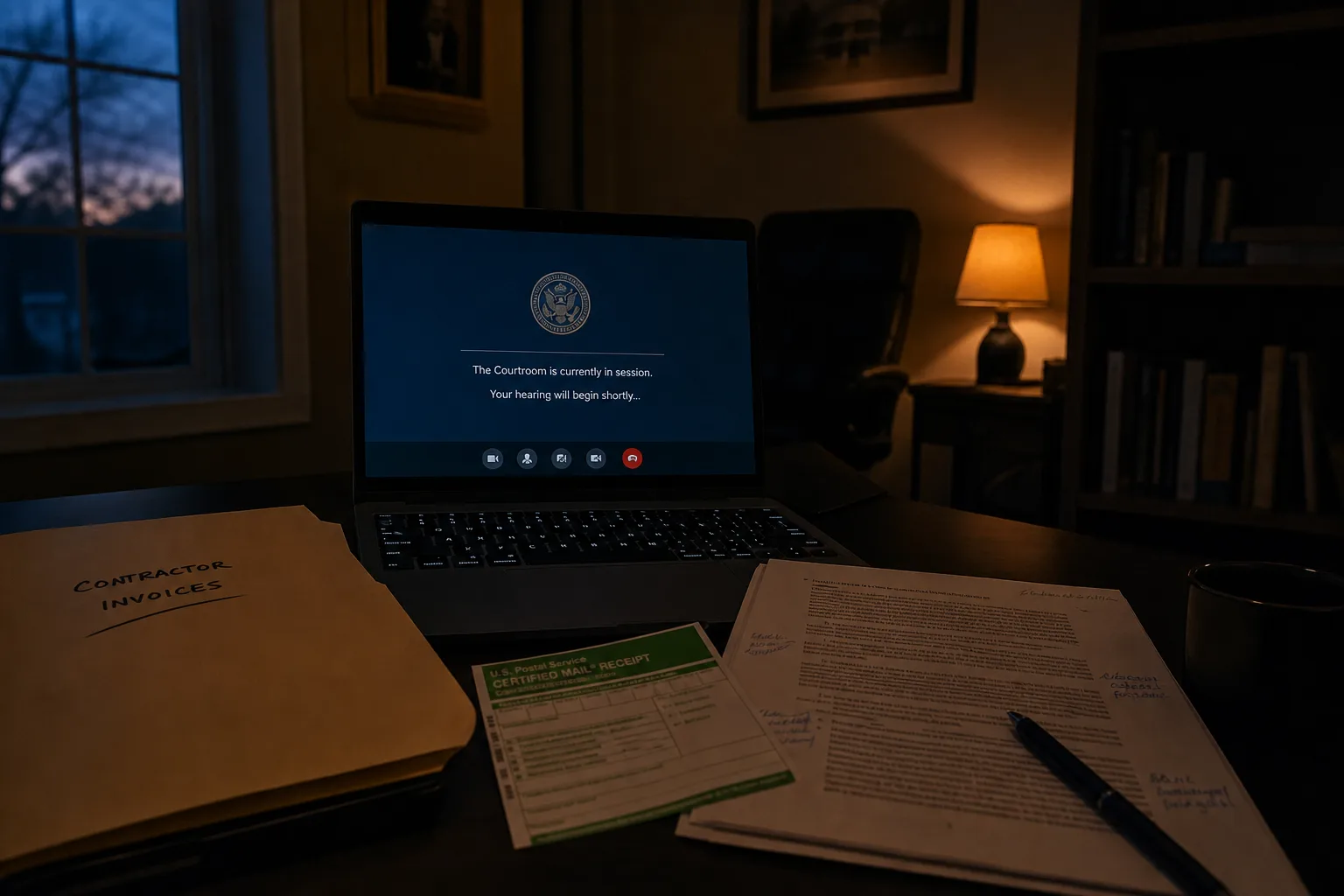
An owner two states away from a problem property pays for legal help differently than an owner across town, and until fairly recently the difference was mostly travel. Somebody had to appear, file on paper, sign in front of a notary, or drive to a county clerk two hours from the office. That work was billed, and it was billed at the same rate as thinking. Most of it has now been absorbed by remote hearings, statewide electronic filing and remote online notarization, which means the shape of the bill has changed even where the hourly rate has not. Knowing which line items disappeared is how you tell a fair quote from a lazy one.
What an hourly bill is actually made of now
Hourly work still dominates anything unpredictable: a dispute where the other side has counsel, a title problem nobody can explain, an eviction that turns into a counterclaim. The rate is set by market and specialty, but the total is set by three things you partly control, which are how organized your records are, how many people at the firm touch the file, and how many rounds of back-and-forth it takes to get an answer out of the other side. An hour of a paralegal assembling your ledger is cheaper than an hour of a partner reconstructing it from your email. Send the folder built, not the folder promised.
The line that shrank is appearance time. A routine status conference that once cost an owner two hours of a lawyer's driving now costs the twelve minutes it takes to join a video call, and many courts have kept those calendars remote because the appearance rate improved. Ask directly whether your matter's court hears routine motions remotely, because the answer changes the estimate materially, and because a firm that has not adjusted its assumptions since the shift may still be quoting you travel it will not incur.
Flat fees moved into work that used to be metered
A great deal of legal work is now sold at a fixed price because it became predictable. Forming an entity, recording a deed, reviewing and marking up a lease, drafting a demand letter, preparing a notice to cure, filing a mechanic's lien release: these have known steps, known filing portals and known turnaround, so a firm can price them without risk. For an absent owner the flat fee is worth more than the dollar saving, because it removes the anxiety that every phone call adds to the bill and therefore removes your incentive to under-communicate. Underinformed counsel is the expensive kind.
Where flat fees break down is at the boundary. A lease review is fixed; a lease review that turns up an unrecorded easement is not. Ask what the fee covers, what pushes the matter out of the flat price, and what the hourly rate is on the other side of that line, and get all three in the engagement letter. Firms answer this readily, because they were asked it often enough that most have a standard paragraph ready.
Limited scope, and buying only the piece you cannot do
Unbundled or limited scope representation, where an attorney handles one defined task and you handle the rest, has expanded in many states over the past several years, with court rules and forms built specifically to let a lawyer appear for a single hearing and withdraw cleanly. This suits the absent owner unusually well. You can do the parts that are simply labor, which is gathering invoices, photographing conditions, keeping a dated log of calls, while paying for the parts that require judgment and a bar license, which are the pleading, the strategy call and the appearance. The cost is a fraction of full representation because you removed the file-building from the bill.
The exchange is that you carry the deadlines. Nobody calendars your response date for you, nobody notices that service was defective, and nobody catches that the notice you sent by email was required to go by certified mail. If you travel, run projects, or check email in bursts, that risk is real and worth pricing honestly against a few extra hours of full representation.
The problems that do not need an attorney at all
A large share of what sends owners looking for counsel is settled by a clear written record and one correctly worded letter. A contractor who stopped showing up, a tenant behind two months who has not been served proper notice, a supplier who delivered the wrong material: each of these responds to a dated, factual demand that states what was agreed, what happened, what you want and by when. Complaints to a state contractor licensing board and to the Federal Trade Commission, which is responsible for policing unfair and deceptive business practices, cost nothing to file and often move a stalled counterparty. Small claims court, in most states, is designed to be used without a lawyer and has raised its dollar limits over the years.
The reliable dividing line is not the dollar amount but the presence of a deadline you did not set. Once a court date, a statutory notice period, a lien deadline or a limitations period is running, the cost of getting it wrong exceeds the cost of an hour of advice, and that hour is the cheapest purchase available to someone who is not in the room.
Price the three routes against the same problem before you choose one. The flat fee tells you what the market thinks the work is worth, the hourly estimate tells you where the uncertainty sits, and the limited scope quote tells you exactly which task you are unable to do from where you are standing.